

Quick answer: A muffled speaker after water exposure is almost always trapped moisture, not permanent damage. Hold your phone with the speaker facing down, gently tap it against your palm, then play a low-frequency tone (around 150–200 Hz) through the speaker for 30–60 seconds — the vibration helps push trapped water droplets out. Repeat 2–3 times if the sound is still unclear, and give it a few minutes between rounds.
Below is the full breakdown: why this happens, the safest way to fix it, and when a muffled speaker actually means something worse.
If your whole phone got wet — not just the speaker — start with our full guide on getting water out of your phone first, then come back here for the speaker-specific fix.
Why Your Speaker Sounds Muffled After It Gets Wet
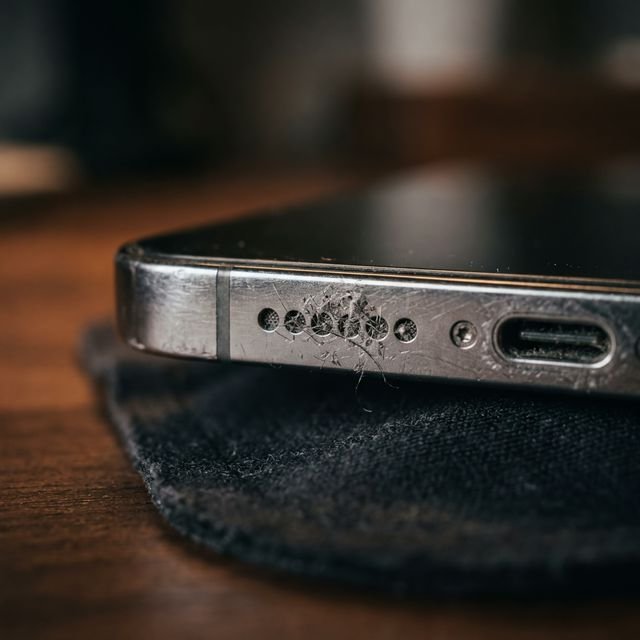
Inside your phone’s speaker is a thin membrane called a diaphragm that vibrates to produce sound. When water sits on top of it or blocks the tiny holes in the speaker mesh, that vibration gets dampened — the result is quiet, muffled, or distorted audio, similar to talking through a hand held loosely over your mouth. This is a physical blockage, not electrical damage, which is why it’s usually fixable without opening the phone or visiting a repair shop.
Common causes:
- Splashes from rain, sinks, or pools
- Sweat during workouts
- A brief drop in water
- Humidity combined with dust building up in the speaker grille
Step 1: Get Rid of Visible Water First
Before trying any sound-based fix:
- Tap it out. Hold the phone with the speaker facing down and tap it gently against your palm a few times.
- Wipe the grille. Use a dry, lint-free cloth to clear any visible moisture around the speaker mesh.
- Don’t use heat. A hair dryer or direct sunlight can warp the speaker components or damage adhesive seals — skip it.
- Don’t use rice. Rice pulls surface moisture from the air, not water trapped inside a sealed speaker cavity, and it can leave dust behind in the process.
For the complete process — including what to do if other parts of the phone got wet too — see our complete water damage guide.
Step 2: Use Sound to Push the Water Out
This is the part most people don’t know about, and it’s the fastest fix that actually works on trapped moisture:
- Play a low-frequency tone (roughly 150–200 Hz) through the speaker at a moderate-to-high volume for 30–60 seconds. The vibration creates enough pressure to break the surface tension holding water against the diaphragm and push it out through the mesh.
- You can do this with any tone generator or a dedicated water-ejection tool/app — the specific frequency matters more than the tool you use.
- Light exposure (a splash or light rain): one cycle is usually enough.
- Heavier exposure (a full drop in water): run 3–5 cycles, waiting a few minutes between each so moisture deeper in the speaker cavity has time to migrate toward the opening.
This is the same underlying principle Apple uses in its Apple Watch water-eject feature — a calibrated tone that vibrates water out of a sealed speaker port.
Step 3: Test and Repeat if Needed
- Lay the phone flat with the speaker facing sideways for a few minutes.
- Play a voice recording or call someone to test clarity at medium volume.
- If it’s still muffled, run another sound cycle — for salt water or pool water exposure, plan on more cycles, since dissolved minerals can leave a thin residue behind even after the water itself is gone.
- Still no improvement after 2–3 full cycles? Let the phone sit somewhere dry (or with silica gel packets, if you have them) for 6–12 hours, then try one more cycle.
When It’s Not Just Trapped Water
A muffled speaker usually clears up within a few cycles. These signs point to something beyond simple water blockage:
- No sound at all, rather than muffled sound
- Loud buzzing or rattling that doesn’t change between cycles
- Only one speaker works (on phones with stereo speakers)
- The problem is still there after 48 hours and multiple drying attempts
- Other functions (touchscreen, camera, charging) are also acting up
If any of these apply, that points toward possible corrosion or hardware damage rather than trapped water, and it’s worth getting the phone looked at by a repair professional rather than continuing to try sound-based fixes.
Common Mistakes to Avoid
- Skip the rice — it doesn’t reach water sealed inside the speaker cavity and can introduce dust.
- Skip the hair dryer — heat can warp the diaphragm or damage water-resistant seals.
- Don’t max out the volume for long periods hoping it’ll work faster — short, repeated cycles at a moderate-to-high volume work better than one long blast.
- Don’t ignore it — leftover moisture and mineral residue can lead to corrosion over time, even if the sound clears up temporarily on its own.
FAQ
Is it safe to play sound through my speaker to remove water?
Yes. A standard audio tone at a normal safe volume won’t damage the speaker, battery, or any other phone component — it’s a widely used, non-destructive method.
How long should each sound cycle last?
Around 30 to 60 seconds per cycle, with a short break of a few minutes between cycles so trapped moisture deeper in the cavity has time to move toward the opening.
My phone is water-resistant — why did the speaker still get affected?
Water resistance (IP67/IP68 ratings) reduces the risk of damage during brief exposure, but water can still linger around the speaker port and temporarily affect sound even on water-resistant phones.
Will a muffled speaker fix itself if I just wait?
Sometimes light moisture evaporates on its own within an hour, but for anything beyond a light splash, actively pushing the water out (rather than waiting) lowers the risk of corrosion from residue left behind.
Sources
- Water Eject: Phone Speaker Water Damage – How to Fix It
- Dry Phone Speakers: Phone Speaker Sounds Muffled After Water?
- Fix My Speaker Cleaner: Muffled Sound Causes
- Fix My Speaker Lab: Free Water Eject & Speaker Cleaner Tool
Last updated: September 2026